
From Optics to Outcomes: Making DEE&I a Strategic Driver, Not a Side Project
Key Takeaways
- While most organizations based in the UK remain committed to DEE&I, US-driven anti-DEE&I sentiment is causing some to rethink their positioning and activities in this space. More than two-thirds (68%) of HR leaders said that despite the US administration’s anti-DEE&I position, their business remains committed to DEE&I and is carrying on as before, with 2% doubling down on their pro-DEE&I stance. However, 28% said it had given them pause for thought on how they positioned and talked about DEE&I and the activities they do, and 2% said they had significantly changed how they spoke about DEE&I internally and externally.
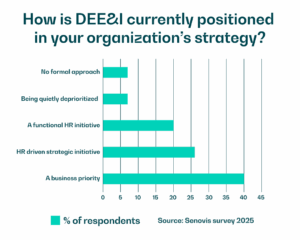
- Even among committed organizations, there is a growing realization that much DEE&I activity up to now has been ineffective or even damaging (academic research backs this up). DEE&I activity needs to be ‘less action, more thought’, according to Professor Binna Kandola, with organizations taking pause to clarify what they actually mean by diversity and inclusion and what they want to achieve. In 40% of organizations, DEE&I is currently positioned as a business priority embedded in strategy, but 26% see it as a HR-driven strategic initiative and 20% as a functional initiative. In 7% of businesses DEE&I is being quietly de-prioritized and in another 7% there is no formal approach for DEE&I.
- Inclusion is always a good thing – but diversity without inclusion can be problematic. Many organizations are reconsidering how to embed inclusion deep into their processes, systems and cultures. Academic research shows that focusing on areas like cognitive diversity and creating psychological safety can have a positive impact on innovation and productivity. Speaking in terms of ‘inclusion’ and ‘fairness’ could also convince more skeptical leaders.
- The language surrounding DEE&I has become overcomplex, off-putting and even frightening. Organizations must strip things back to basics, grounding conversations in respect and clarifying expected behaviors, while giving people the grace to make mistakes.
- More than half (60%) of HR leaders predict that in two years’ time DEE&I will be seen as a core part of business resilience and growth strategy. However 20% feel it will be a values-led initiative that struggles to prove ROI, 12% that it will be viewed through the lens of reputational risk and 8% that it will be a compliance requirement with far diminished focus. As DEE&I is bouncing backwards, so it will bounce forward again. But now is the time for CHROs and DEE&I leaders to consider what it looks like when it does, fixing the foundations to build something stronger, more sustainable and business-focused.

There is perhaps no more contentious topic facing HR leaders right now than diversity, equity, equality and inclusion (DEE&I), its future and whether it has one at all. A turbulent geopolitical environment, financial constraints and increasingly loud attacks on the entire concept of DEE&I mean organizations and HR leaders have no choice but to reexamine their approach to this area, rethinking its positioning, strategic value and impact on economic performance and long-term sustainability.
Can DEE&I survive what feels like an existential moment? According to an expert panel and senior HR audience at a recent exclusive Senovis group lab event, the answer is yes – but only if leaders and organizations face the challenge head-on, grounding discussions in humanity, and resetting and reframing strategies to jettison some of the less impactful, more performative or even damaging aspects of current practice.
As leading business psychologist Binna Kandola told attendees, when it comes to the current backlash: “Trump lit the match, but there needed to be kindling… [Much DEE&I activity] has been giving diversity and inclusion a bad name.” Indeed, data scientist and organizational futurist Wilson Wong shared academic research that revealed only 2% of diversity interventions had actually had any significant effect, raising the question: what was the purpose of these interventions in the first place?
HR and DEE&I professionals need to engage with these challenging perspectives in order to move forward – and at the Senovis event, they did just that, in an open, candid discussion with peers about where we go from here.
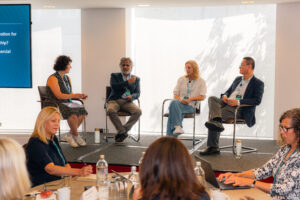
Dr. Wilson Wong speaking with HR Leaders at ‘DEE&I: invest or divest’
Moving DEE&I from action to thought
According to Kandola, too much DEE&I activity up to now has been “all action, no thought”, more advocacy than diversity or inclusion. “One of the first things we need to do in organizations is articulate what we mean by ‘diversity’ and what we mean by ‘inclusion’,” he advised. “Your actions should stem from that – not the other way around.”
“We need to understand what diversity is, what inclusion is and make sure that we have them working alongside each other, because they don’t work in isolation,” agreed attendee Maris Hanson, group legal and chief people officer at Giant Group.
That means moving away from surface-level solutions like gender targets or having diverse interview panels (which, Kandola said, achieve less positive impacts in terms of diversity than trained homogenous interview panels) and thinking more deeply about how to create and embed inclusion, psychological safety and organizational justice.
The answer will be different for every business as context is king. “Start with what’s material and important to your business and the values you want to pursue,” said Wong. “We can all be guilty of ‘solution-eering’. Give yourself permission to stand back and ask: what is the issue here?” As one CPO attendee articulated during roundtable discussions: “It’s about what good looks like for us.”
In an event poll, when asked how confident they were that their organization’s current DEE&I approach was delivering business value, senior HR leaders rated themselves an average of 46%, suggesting room for improvement in many businesses.
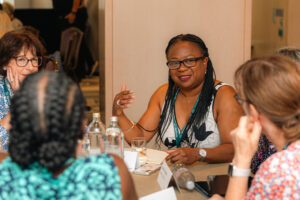
HR leaders dicussed DEE&I at the event at the Royal Lancaster Hotel, London
Gaining buy-in in challenging times
Times are tough for DEE&I in many businesses, particularly those with strong links to the US. However, many organizations are staying committed to inclusion: in a pre-event poll,
68% of HR leaders said that despite the US administration’s anti-DEE&I position, their business remained committed to DEE&I and was carrying on as before, with 2% doubling down on their pro-DEE&I stance.
However, 28% admitted that the current situation in the US had given them pause for thought on how they positioned and talked about DEE&I and the activities they do, and 2% said they had significantly changed how they spoke about DEE&I internally and externally.
Even in businesses that want to remain committed to diversity, economic challenges mean challenging decisions have to be made in terms of resources and prioritization. While 40% of leaders present said that DEE&I was currently positioned as a business priority in their organization’s strategy, 26% felt it was more seen as an HR-driven strategic initiative and 20% as a functional initiative. In 7% of businesses DEE&I is being quietly de-prioritized and in another 7% there is no formal approach for DEE&I.
Jo Carlin MSc GMBPsS FCIPD, SVP HR Europe and global DEI lead at Firstsource, shared how dialing down some of the emotion around the topic and encompassing concepts like fairness, access and inclusion was helping her gain leadership buy-in and meaningful momentum.
“Inclusion is always a good thing, and we risk losing some of the good work in this space behind the rhetoric of the argument,” she said. “As practitioners, we need to find a way to strip away the noise and get back to basics around the systems we have in place to support inclusion. Our responsibility is the health of the organization and the health of the people, and we need to focus on that.”
CHRO and HR leader attendees reflected that “we need a dose of reality”, rather than hiding behind complex and obtuse language. “We don’t help ourselves sometimes in our language,” one attendee said. “We need to go back to basics: the expected standards of behavior around here.”
And while the tone is set at the top and leadership commitment is crucial, HR practitioners must not neglect the impact of change in the middle of the organization. “If you support the middle managers and give them the autonomy, the resources and the voice you can shift the dial,” said Wong. “There is evidence that organizations with a high level of diversity, where people feel they have the autonomy and support, demonstrate higher innovative work behaviors. The group where that has the highest effect is middle managers.”
Focus on inclusive systems, not (only) demographic data
DEE&I cannot be viewed in a vacuum: it is systemic and cultural. And the most important element is inclusion. “Whether you have diversity or not, inclusion is always a good thing,” said Kandola. “Diversity without inclusion is problematic: the magic sauce is inclusion.”
Rather than a narrow focus on singular demographic characteristics, inclusion means looking at the whole organizational system and embracing cognitive diversity, which tends to have a greater impact. “You’re looking at the culture of the organization, psychological safety, fairness,” said Wong. “A lot of organizations benefit from these interventions as it means shifting your culture to make people more accepting of difference. It means people speak up when they think things aren’t working. It’s not just DEE&I: it’s productivity.”
Rather than simply focusing on demographic data, HR leaders should think about embedding systems that are inclusive by default. It’s a point that hit home for many attendees, including Ed Evans, CPO of Pret A Manger, who reflected: “This has got me thinking about whether retail businesses that are heavily metric driven are focusing too much on diversity and not enough on inclusion – are we actually instilling the inclusion and fairness practices that lead to diversity?”
Sustainable success does not mean having a large DEE&I team running the show but rather equipping functional and operational leads to embed inclusive practices throughout everyday business practice. “Making DEE&I sustainable is about upskilling people in their roles, helping people understand that it’s within their gift to do it in their function,” added Victoria Jones FIEDP, global VP, EDI at AtkinsRéalis.
When it comes to how organizations are currently measuring progress in DEE&I, among our senior HR attendees 88% are using demographic data, 88% inclusion metrics and 32% business indicators such as market share. A further 68% judge success via external benchmarks and recognition like awards and another 68% use internal feedback and informal assessments. Only 8% don’t measure their progress at all.
Foreground humanity
One attendee shared that when they first came into the DEE&I space from another business area, he was “terrified of using the wrong language”. This is not a sustainable or healthy place to be, and organizations need to take some of the heat out of discussions around DEE&I.
That means giving people the grace to make a mistake, which comes back to psychological safety. “We need to have that grace, because the majority of people don’t want to do bad things,” said Kandola. “We can give each other feedback, but we should accept that we will all make mistakes.”
One CPO shared a story of an interaction with a religious colleague who objected to Pride month celebrations. “In the past we had tried to bamboozle with language, but I had a call and stripped it back to: ‘You don’t have to engage, but you do have to be respectful of how we operate in this organization, and we want people to feel that they can belong.’ I didn’t mention diversity or inclusion. It was one human interacting with another with kindness and understanding.”
The future of DEE&I
In a poll at the event, 60% of senior HR leaders in the room predict that in two years’ time DEE&I will be seen as a core part of business resilience and growth strategy, suggesting that the majority of HR leaders feel optimistic about sustainably embedding DEE&I into business strategy and systems. However 20% feel it will be a values-led initiative that struggles to prove ROI, 12% that it will be viewed through the lens of reputational risk and 8% that it will be a compliance requirement with far diminished focus.
Kandola predicted that as DEE&I has bounced backwards, it would bounce forward again – but this comes with a critical question everyone involved in this space must ask themselves. Do we revert to ineffective or even damaging practice? Or do we rethink things, taking this opportunity to reset the foundations to move forward for the good of organizations, individuals and society?
3 questions for CHROs and Senior HR leaders to consider:
- What does ‘diversity’ and ‘inclusion’ mean for our organization and what are we actually trying to achieve?
- What do we need to do to create an operating system across the organization that is inclusive by default?
- How do we ensure discussions around DEE&I are grounded in humanity and respect, including of different viewpoints, giving our workforce and other stakeholders clarity on our values in this space?
Join Senovis
Senovis is a modern strategic ecosystem where CHROs and senior HR leaders gain rare, direct access to the minds shaping the future of work from leading economists and organizational psychologists to futurists and data scientists.
Members stay informed and connected through executive councils, group labs with experts, curated connections, and strategic upskilling with masterclasses. Senovis works with individuals and organizations to deliver the strategic insight outside of HR that HR needs most.
To explore joining, visit senovis.com. You can also register your interest for the next new joiner event, and a member of the team will keep you updated.
About the author

Katie Jacobs is an award-winning business-journalist and editor and well-regarded commentator on the world of work and HR leadership. She was previously editor of HR magazine, where she was involved in running programmes like HR Most Influential, the HR Excellence Programme and HR in the Boardroom. She also previously worked at the CIPD, where she built the body’s HR leader network, creating a strong community of CPOs. She writes regularly for various HR and management publications and hosts events for HR leaders
Get in touch
"*" indicates required fields